

“I failed angst in high school. They let me graduate anyway.” ― John Scalzi, Your Hate Mail Will Be Graded
My junior year at South Miami Senior High School was a strange “middle passage” in my transition from being a wide-eyed and naïve sophomore to becoming a (hopefully) more educated and mature high school senior. As in everything in life, it had its fair share of happy golden moments as well as some memorably sad ones. In the words of Charles Dickens, “it was the best of times, it was the worst of times.”
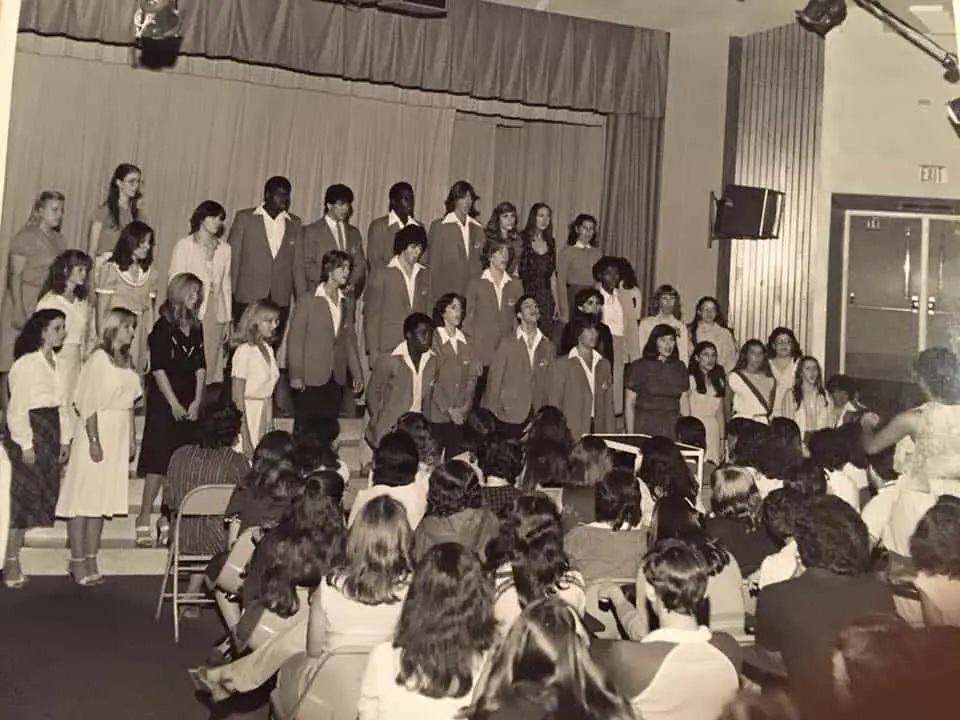
As luck would have it, my first official day as an 11th grader began with another bus-related snafu. Mrs. Nolan, the strict-but-kind driver who had picked me up and dropped me off at my bus stop the previous school year, retired at the end of the summer session.
Of course, this meant that a new driver, Nelson Gonzales, was assigned to pick up Special Education students that lived in the Westchester-Sweetwater area but attended South Miami High.
Once again, my careful preparations for the first day of the new school year were affected by Murphy’s Law (“If anything can go wrong, it will go wrong.”)
The school bus didn’t show up at all (I found out later it had broken down on the way to my area.) I had to call South Miami High’s office to let them know that I hadn’t been picked up.
Ms. Olive, one of the school secretaries, told me not to worry – she’d send another bus for me as soon as she could. She did, too, but I still arrived at school late. As a result, I had to wait in the auditorium for two hours until the guidance department found my schedule and handed it to me.
My schedule for the 1981-1982 school year was a nice balance of required courses (English, Math, and Health) and electives including Mixed Chorus, Yearbook Production and Editing, and Art. I had taken my junior year social studies classes in the six-week summer session, and I was excused from having to take P.E. class.
In theory, 11th grade should have been a “milk run,” a term used by World War II pilots to describe an easy mission.
The reality, of course, was somewhat different.
Not surprisingly, Ms. Owen’s Mixed Chorus class was my favorite. Even though I had not volunteered to perform a solo in the April Spring Concert as a 10th grader, I acquitted myself well enough as a member of the Men’s Ensemble and was accepted into the more advanced soprano-alto-tenor-bass (SATB) singing group.
Now, although singing in a choral group was easier for me than learning to play the piano (I attempted to take piano lessons when I was nine years old but found it insanely difficult), it was still challenging. Not only did I have to learn to sing in four-part harmony, but I still had to overcome my shyness. I’m a sociable fellow, but I’m also shy and unassuming, partly because I was raised to be “seen rather than heard,” but mostly because the physical manifestations of my cerebral palsy still tend to embarrass me, especially when I’m in the company of strangers.
Singing in public was my way of overcoming at least one of my many fears by facing it head-on, and Ms. Owen was good at helping her students find confidence in themselves – sometimes in unexpected ways.
Every school year, the choral groups worked hard to prepare for two concerts. One was the Winter (or Christmas) Concert in December; the other one was the Spring Concert in April. The advanced singers (I wasn’t one of them.) also went to the countywide competitions in the second half of the year. Thus, unlike members of the varsity sports teams, we singers only had a few chances to shine in front of our fellow Cobras.
As a result, we spent each semester preparing for our limited number of concerts. Usually, Ms. Owen would have us try as many as six or seven different songs per group, then whittle the number down to three or four based on how well we performed them in class.
Most of us, myself included, were content to just sing the songs in the program and not “do” a solo, even though we could earn extra credit if we did. I felt comfortable singing in the relative anonymity of the bass section, but the idea of standing on stage and belting out a song by myself didn’t appeal to me at all.
So as the march of time progressed and the Winter/Christmas Concert loomed nearer on our horizon, I dutifully rehearsed along with the young men and women in our ensemble and left it at that. My philosophy on solos was clear – there was no way on Earth that I would do one.
However, I wasn’t counting on my chorus teacher’s determination to push me out of my comfort zone.
Ms. Owen didn’t threaten, cajole or plead with me to pick a song for a solo performance in the December concert. She had casually asked me once or twice if I was interested in doing so, but I gracefully declined. I was terribly shy, and I also didn’t think I was a good singer on my own.
My teacher, however, wasn’t a woman who took “No” for an answer, and yet she wasn’t going to force me to sing a solo if I didn’t want to. She was a smart teacher, though, and she believed that I could do it. So with great skill and subtlety, Ms. Owen tricked me!
If memory serves, we didn’t have to study music theory or take long written mid-term or final exams in class. We were graded on attendance, conduct, and – of course – how well we learned and performed our assigned repertoire. Sometimes, for purely academic reasons, Ms. Owen would grade us on how well we mastered certain aspects of vocal training.
About a week before the Winter Concert, Ms. Owen turned down the lights in our practice room and turned on a projector. On the wall, we students saw the sheet music for Irving Berlin’s “White Christmas.” As we looked at the notes and lyrics, Ms. Owen sat on the bench behind the Kawai piano in the middle of the room.
“Mr. Diaz,” she said sweetly, using an abbreviated version of my last name, “Would you mind singing the first lines of that song, please?”
I figured this was part of the midterm exam, so I said, “Sure, Ms. Owen.”
I eased into the “singer’s stance” we’d all been taught in class, took a deep breath, then sang the opening lines of “White Christmas” in a passable baritone:
I’m dreaming of a white Christmas
Just like the ones I used to know
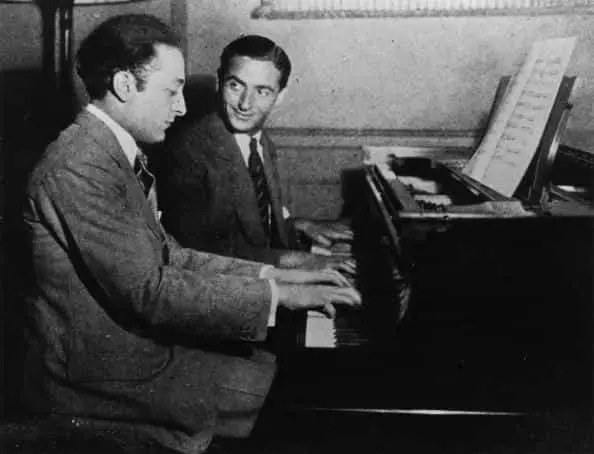
I thought that was the extent of it and prepared to go back to my seat in the bass section, but Ms. Owen kept playing the piano. “Please sing the next line, Mr. Diaz.”
I raised my eyebrow quizzically at this, but I did as I was told. I listened to Ms. Owen as she replayed the first line of “White Christmas” on the piano, then I joined in at the start of the second line:
Where the treetops glisten and children listen
To hear sleigh bells in the snow
Ms. Owen stopped playing the piano and scribbled something on her notebook. I sighed with relief. Okay, I thought, that was an easy mid-term exam! Once again, I made my way to my folding chair and silently congratulated myself for not messing up the vocal exercise.
Okay, that was nicely done, Mr. Diaz. I’m putting you down for a solo in next week’s concert.”
“Whoa!” I thought.
I said that singing “White Christmas” in class was one thing and singing it in front of several hundred spectators was another, but Ms. Owen would have none of it. “You can sing it, Alex,” she said with the quiet but firm authority that the best instructors seem to possess.
“But the concert is only a week away,” I protested even as I felt my resistance begin to weaken.
She saw that I was wracked with self-doubt, so she sweetened the pot, so to speak. “Okay. Here’s what we’ll do. Just sing it during the first assembly. I won’t make you sing it at the other assemblies if you don’t want to. But do it once, because I know you can do it.”
My mind reeled as it tried to come up with reasons why singing a solo was a bad idea, but I knew there weren’t any valid ones. “White Christmas” is not a complicated song, it’s within my vocal range, and it is a nice, homey holiday song. And I only had to sing it once. For these reasons, I reluctantly agreed.
As I sat back down on my chair, I closed my eyes and took a deep breath. How in the world, I wondered, do I get myself into these situations?


