

A Golden Retriever named Scout, who’s a companion dog of a 17-year-old teen with cerebral palsy, recently won the “Caning Companion for Independence” (CCI) competition.
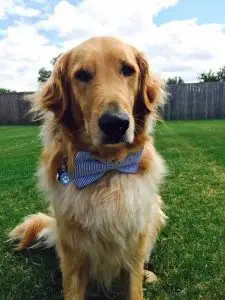
The competition, organized by Hill’s Pet Nutrition and the veterinary journal, Clinician’s Brief, looks at exceptional service pets across the world and judges their abilities based on owner stories and how well the pet assists people with disabilities.
“Assistance dogs work every day to improve the quality of their owner’s lives,” Jolle Kirpensteijn if Hills Pet Nutrition said. “This competition was an opportunity to work with our veterinary healthcare team colleagues to celebrate the outstanding contribution that assistance dogs make and to champion the amazing organizations that train them.
Scout helps support his owner, Duncan, in a number of ways, such as removing Duncan’s socks from his feet, picking up laundry, socializing with Duncan, accompanying him to medical appointments, therapy sessions, and much more. Duncan received Scout from CCI around three years prior to winning the competition.
Scout won a two-year supply of Hill’s Science Diet pet food, while CGI won $1,000 for training the 5-year-old canine. Two other winners in the competition, Lena and Honey, both won a year-supply each of Hill’s Science Diet pet food.
Honey is a German shepherd that lives in Florida and assists a war veteran who’s confined to a wheelchair. Lena is a Doberman Pinscher who helps a girl who suffers from seizures, anxiety, and PTSD.
Interested in a Service Dog?
Obtaining a trained service dog for those with disabilities, including children and adults with cerebral palsy, can be an arduous task. It generally includes research on the applicant’s part, followed by a long series of questions upon applying for a service dog, which can help physicians and experts find the best service canine possible for the applicant.
There is also certain qualifications that must be met before an applicant is approved for a service dog. One most important qualifications is that the applicant generally must have an ADA-defined disability. The applicant must also show how a service dog would benefit them in areas such as mobility, anxiety, and other issues that stem from the applicant’s disability.
At the same time, however, the applicant must ensure that the dog will be taken care of properly and that they’ll make the proper commitment needed to the animal.
If you’re interested in a service dog for yourself or your child, the first place to go is to a non-profit organization that trains their dogs to perform specialized tasks and assist people with special needs. Some of these organizations include:
-4 Paws for Ability
-International Association of Dog Partners
-Dogs for the Deaf and Disabled Americans
-Paws for a Cause
Getting a service dog from a non-profit dog training organization is beneficial in that it allows people with disabilities to have a dog that already knows how assist them. On the downside, as mentioned earlier, the paperwork and process can be long and difficult.
Non-profit dog training organizations are not the only way that people can obtain a service dog. It’s also possible to adopt a dog yourself or for your child and hire a professional to train the pup to be a service dog. Although it’s possible for some people to train the dogs themselves, it’s generally not advised for animals who’ll be working with people with cerebral palsy or other special needs.
Watch below as Duncan and his mother give thanks on behalf of Scout, who sits diligently beside them.


