

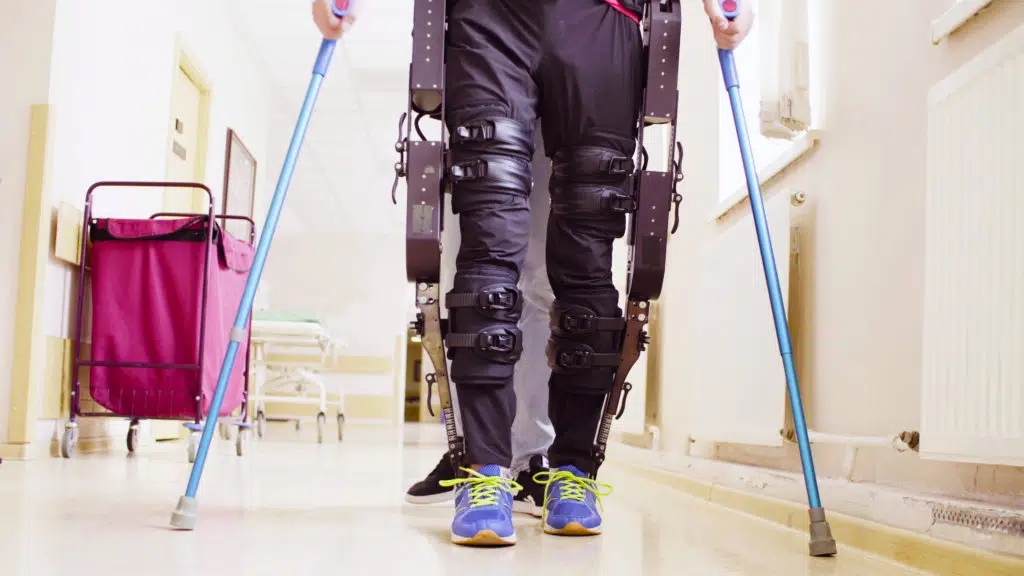
One of the latest developments in cerebral palsy research is the use of mechanical, robotic devices. Researchers are using these machines to help children walk better and also to provide gait training. An important study is set to start soon, thanks to federal funding for researchers at Northern Arizona University.
Many Children with Cerebral Palsy Struggle to Walk
Cerebral palsy is a neurological condition most often caused by brain damage during fetal development or labor and delivery. Damage to the brain affects muscle control, balance, and coordination. Cerebral palsy severity and symptoms range widely from one individual to the next, but difficult walking is common.
Mobility is a serious concern for children with cerebral palsy. They face many limitations throughout their lives because of impaired mobility. Some children cannot walk at all, and some require assistance.
Robotic Exoskeletons to Improve Mobility
Researchers have been working on cerebral palsy mobility for many years. A recent development is the creation of robotic exoskeletons. Researchers at the National Institutes of Health (NIH) made the first such device to improve crouched gait in children with cerebral palsy in 2017.
Crouched gait, in which a child bends their knees excessively, makes walking difficult. It also leads to degenerative issues that worsen walking over their lifetimes.
The NIH group tested the device in a group of just seven participants with crouched gait. They saw improvements in knee extension equal to or better than results from invasive surgery to correct gait.
Unlike robotic exoskeletons used for adults with total paralysis, this one did not walk for the participants. They used their muscles to walk, and the robot assisted. The hope is that the device will strengthen a child’s muscles and correct their gait to improve unassisted walking.
Research Group Receives Major Grant to Continue Studies
One of the leaders in robotic walking devices for children with cerebral palsy is Zach Lerner. Lerner is an engineer and professor at Northern Arizona University’s Department of Mechanical Engineering. He was involved in the 2017 research and recently won a major NIH grant to continue his work.
The grant of $2.1 million will allow him to begin a larger randomized control trial. The study is set to provide a 12-week gait training session to participants.
Lerner and his research group hope to show that strengthening the muscles around the ankle and adapting ankle movement with the device will significantly improve walking in these children. From preliminary studies, they know that dysfunctional calf muscles contribute to crouched gait. The researchers hypothesize that focusing on the ankle area will support the calves and improve gait.
Currently, children with gait issues need surgery or use assistive devices and orthotics. These can improve walking, but surgery is invasive and risky. The standard devices assist many children with walking but do not provide lasting improvements.
The ongoing research using robotic exoskeletons is exciting for children and families living with cerebral palsy. The simple concept of rehabilitating muscles and joints using new technologies has the potential to change lives.


