

This article has been fact checked by a Board Certified Pediatric Nurse Practitioner. Sources of information for the article are listed at the bottom.
For any content issues please Contact Us.
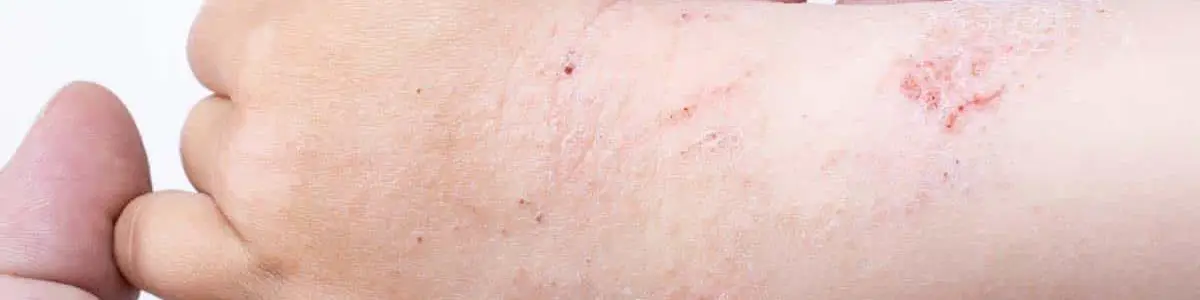
Skin breakdown is a significant concern for children with cerebral palsy, and symptoms associated with the disorder can lead to ulcers, infections, rashes, and many other integumentary issues. Great care should be taken to keep skin integrity intact for these children. Monitor closely for early signs of breakdown or infection.
Infections and Skin Conditions Associated with Cerebral Palsy
Children with cerebral palsy run the risk of developing infectious skin diseases, defined as skin conditions that can spread to other people. There are four main types of infectious skin conditions, which include:[1]
Viral Skin Conditions
Viral skin conditions occur when an infection inside the body presents as lesions or rashes on the skin. These can often be contagious but are also typically self-limiting.
Avoiding close contact with others and practicing good handwashing, especially when experiencing a viral rash, will help reduce the risk of spreading the infection to others.
Bacterial Skin Conditions
Any break in the skin may become prone to harboring bacteria. Surgical incisions, insect bites, pressure ulcers, and any other areas of impaired skin integrity are at risk of developing a bacterial infection.
Keeping open skin clean and dry, covered, and avoiding picking or touching lesions will help prevent infection. Redness, swelling, pain, or lesions may all be signs of a developing bacterial skin infection. Some, but not all, bacterial skin infections are contagious.
Parasitic Skin Conditions
Dust mites, fleas, head lice, and other parasites can cause parasitic skin conditions.[2] Parasites can also live in the child’s hair, skin, and gastrointestinal tract. Itching, rash, and small bite marks may indicate a parasitic skin infection. These are often highly contagious.
Fungal Skin Infections
Fungi are found everywhere, but they mostly do not cause infections. A fungal infection in the skin usually occurs in areas that trap moisture and are warm, such as between the toes. Fungal skin infections are typically itchy and cause a discolored rash. Common fungal infections include ringworm, athlete’s foot, candida, and tinea versicolor.
Non-Infectious Skin Conditions Associated with Cerebral Palsy
Non-infectious skin conditions are skin problems that cannot be passed on or transmitted to another person.
There are several reasons a child with cerebral palsy is more prone to non-infectious skin conditions:
- Drooling and incontinence can lead to excess moisture that causes localized skin rashes and irritation.
- Poor mobility can lead to pressure sores from beds, wheelchairs, and other assistive devices.
- Children with cerebral palsy who also have emotional or behavioral challenges may engage in self-harm, resulting in skin injuries and scarring.
How Can I Prevent My Child From Developing a Skin Condition?
There are numerous things you can do to help make sure your child has the least possible chance of developing skin conditions:
- Ensure your child washes their hands often, especially after coughing, sneezing, using the bathroom, and before and after meals.
- Ensure that your child’s bedsheets and blankets are changed and cleaned regularly.
- If your child uses adaptive equipment, ensure the equipment is washed and dried regularly and fitted correctly.
- Your child’s skin should always be kept clean and dry. Moisturizing is also essential.
- Keep your child’s hair shampooed and cleaned regularly.
- If your child wears diapers or any incontinence products, clean and change them promptly.
- Make sure your child’s circulation is healthy if they are not mobile.
Treatment for Skin Conditions
In some instances, your child’s doctor may recommend an over-the-counter medication, which can help clear up skin issues. However, if the problem is severe, your pediatrician may refer your child to a dermatologist or other specialists needed for assistance.
Treatment will depend on your child’s skin condition, ranging from antibiotics to prescription-based topical medications. Doctors can help you manage and treat most conditions to keep your child healthy and comfortable.
Lifelong Financial Assistance for Your Child's Birth Injury
Get Help NowReferences
- MedlinePlus. (2023, April 12). Skin Infections.
Retrieved from: https://medlineplus.gov/skininfections.html - Feldmeier, H. and Heukelbach, J. (2009, February). Epidermal Parasitic Skin Diseases: A Neglected Category of Poverty-Associated Plagues. Bull World Health Organ. 87(2), 152-9.
Retrieved from: https://www.ncbi.nlm.nih.gov/pmc/articles/PMC2636197/


