• Skip to primary navigation
  • Skip to main content
  • Skip to primary sidebar
  • Skip to footer

Cerebral Palsy Guidance

Answers and Assistance

877-862-8594phone iconCall
  • Cerebral Palsy
    • Types
    • Symptoms
    • Diagnosis
    • Treatment
    • Prognosis
    • Causes
    • Associated Disorders
    • Gross Motor Classification System
    • Life Expectancy
    • Myths
    • Risk Factors
    • Support Groups
    • Research
    • Birth Injury Overview
  • Living With Cerebral Palsy
    • Support Groups
    • Daily Communication
    • Physical Fitness
    • Toilet Training Tips
    • Eating and Feeding Tips
    • Wheelchairs and Scooters
    • Walkers, Canes, and Standers
    • Falling Issues
    • Augmentative and Alternative Communication (AAC)
    • Conductive Education
    • Tips For Better Sleeping
    • Traveling Tips
    • Sports
    • Bullying
    • Inclusive Playgrounds
    • Respite Care
    • Transitioning to Adulthood
    • Vocational Counseling
    • College Guide
    • Finding a Job
    • Having Children
    • Costs
  • Financial Assistance
    • Government Assistance
    • Special Education Assistance
    • Cerebral Palsy Lawyer
    • Cerebral Palsy Lawsuit
  • Our Blog
  • About Us
  • Contact Us
Home > Our Blog > Growing Up With Cerebral Palsy- Part Seven of a Series

Growing Up With Cerebral Palsy- Part Seven of a Series

Written by Alex Diaz-Granados
March 21, 2016 by Alex Diaz-Granados

Fall 1977. Jimmy Carter was in the White House. Elvis Presley was dead. The first Apple II, Tandy, and Commodore personal computers were on the market, albeit they were expensive. George Lucas’s space-fantasy film Star Wars was well on its way to becoming the highest grossing box office hit of its time. The guillotine was retired after the execution of Hamida Djandoubi (the last such event in Western Europe). Billy Joel’s The Stranger was about to be released, and the Space Shuttle Enterprise (named after Star Trek’s starship) had made its first test free-flight.
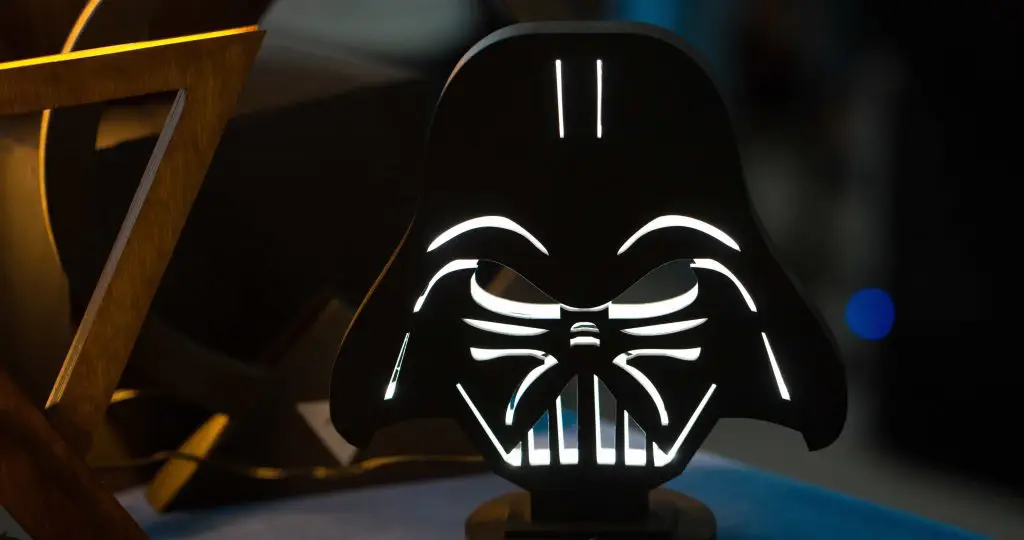
Darth Vader

When I was 14, it was not a very good year.  My long-time relationship with a girl I met five years before was over. My beloved grandfather, Enrique, was dead.

Furthermore, my mom decided to sell the house on SW 102nd Avenue and purchased a new townhouse in the Fontainebleau area that hadn’t been built yet, and I was starting seventh grade at Riviera Junior High (now Middle) School.

We moved out from our former house a few weeks before the school year started, but the new townhouse was still a collection of piles of lumber and concrete bricks that didn’t yet resemble a structure.

The developers promised it would be ready by November of 1977. Since we couldn’t stay at the house on 102nd Avenue, Mom, my older sister, and I lived in an ugly and cramped apartment in Sweetwater while our new house was being built. (Alas, the developers’ estimate was overly optimistic. Mom was not given the keys to the townhouse until February of 1978.)

As you might imagine, I was in a deep funk for much of seventh grade. We students – it didn’t matter if we were in special education classes or not – now I had to live by the bell at Riviera, so to speak, as we followed the all new “period” system.

At Tropical, one teacher usually taught the major courses (English, social studies, and math) according to his or her lesson plans for the day. Students usually only changed classes when they attended art, music, and physical education.

At Riviera, we were handed a schedule that looked something like this:

  • Home Room
  • 1st Period: American History/Social Studies
  • 2nd Period: Science/Health
  • 3rd Period: Math Skills (or Algebra, depending on what grade we were in)
  • 4th Period: English
  • 5th Period – Elective
  • 6th Period: Physical Education

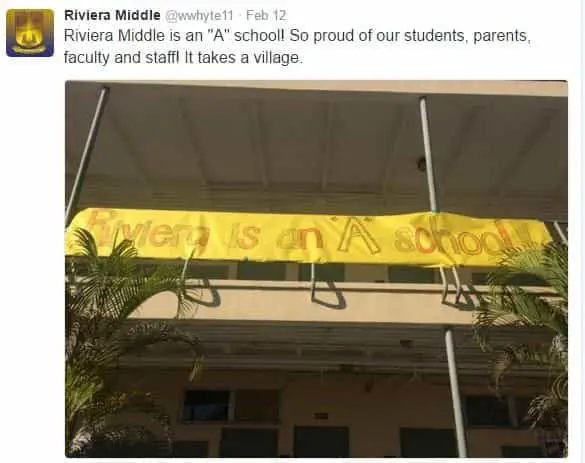
Riviera Middle School Twitter

Classes started at 8:30 a.m. and ended at 3:30 p.m. Each period lasted 55 minutes, and it was usually ushered in by the insistent jangling of a school bell.

We had five minutes to get from class to class before a second “class is in session” bell rang. If we were tardy, we had better have a good reason for it or else we’d be given “late slips” by our teachers. If we received a certain number of those pink or yellow slips of paper, we earned after school detentions.

I don’t recall exactly how my schedules from 1977 to 1980 looked like. I do remember that I had the same English teacher (Ms. Allen) and math instructor (Mr. Krupp) in seventh, eighth, and ninth grades.

I also was back in Special Ed for half the school day; my home room was in that department, as were the wood shop and home economics classes that I was required to take. As a result, half of my school day was spent in regular classes, and the other half in Special Ed.

Needless to say, I was caught in an academic no man’s land, at least from my perspective. I liked my home room teachers well enough. Mr. Coates was easy-going and allowed me to spend the period in the school library after he took attendance; his replacement, Mr. Katims, was also nice but a lot stricter. He insisted that I stay in home room for the entire period unless there were valid academic reasons for me to go to the library.

To be honest, I didn’t like Riviera Jr. High much. I liked my regular classes more than I did the Special Ed ones even if my grades hovered dangerously nearly a 2.0 grade point average.

Sure, I saw my disabled peers more often if our schedules coincided. But one of them was my ex-girlfriend, and I was still angry about how the relationship had ended. I was not in a forgiving mood at the time, and the rift between us took years to heal.

I also hated Wood Shop and Home Economics. Those classes took up two slots that could have been taken up by electives that meshed with my newfound ambitions of becoming a writer. I would have rather attended Mrs. Heller’s journalism class than those “baby” classes I was forced to take because I was not fully “fused” (another term for mainstreamed that was all the rage back then).

I wasn’t a happy camper. I was frustrated because I was not a master of my academic destiny, and I felt lonely because I wanted girls to notice and like me. But my spastic cerebral palsy, with its many manifestations – clumsiness, jerky walk, involuntary twitching, slightly slurred speech that came and went, and my right arm’s unwelcome tendency to curl up on its own – made me extremely self-conscious around girls – especially the ones the other boys liked.
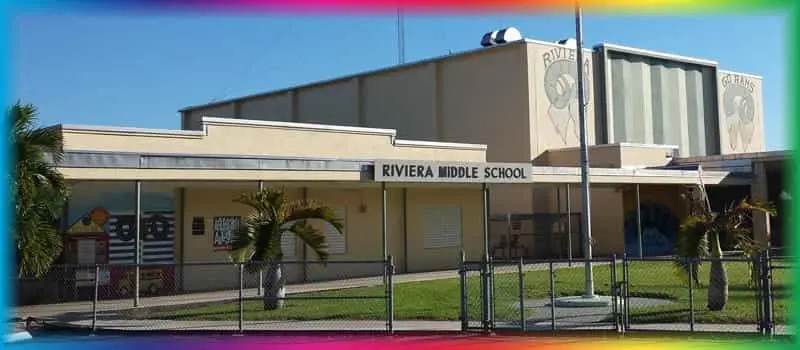
Riviera Middle School
(Photo by Miami-Dade School District)

As a result, I took the path of least resistance; I didn’t ask any girl out on a date until the ninth grade dance in May of 1980. This had two negative effects.

First, some of my friends began to think that I was gay because I wasn’t pursuing any of the girls I knew. (The involuntary curling of my arm also didn’t help matters in that department.)

Second, the one time that I did tell a girl that I wanted to be her boyfriend earned me a polite but firm,

No, thank you, Alex. I don’t like you that way. You’re too nice; you’re the brother type, not the boyfriend type.”

Of course, not everything about my junior high years were doom and gloom. Star Wars had premiered in May of 1977, and it was still in theaters when I started seventh grade.

I wasn’t a huge fan of science fiction back then, so I ignored all the hoopla about Star Wars until October. It took one viewing of The Making of Star Wars on television to do what all the urgings of my friends had failed to do – get me to see the movie.

I was still skeptical about Lucas’s phenomenally popular film when my mother dropped me off at the old Concord Mall theater on a cool October Saturday afternoon. But as soon as the house lights went totally dark and the 20th Century Fox fanfare blared out from the theater’s monaural speakers, that skepticism vanished.

From the fade in of the, “A long time ago in a galaxy far, far away” card to the final credits roll 124 minutes later, I was carried away by Lucas’s space fantasy about “a boy, a girl, and a universe.”

Watching Star Wars in 1977 was a watershed moment in my life. Not only did I become a fan of the movie and the franchise it launched, but I also confirmed a decision I’d made earlier in life: I would become a writer someday.

Lifelong Financial Assistance for Your Child's Birth InjuryCerebral Palsy

Get Help Now
Written by Alex Diaz-Granados

Written by Alex Diaz-Granados

My name is Alex Diaz-Granados. I’m a Miami-based freelance writer, online reviewer, and aspiring novelist. I studied journalism and mass communications in college, and I live in a nice condominium in sunny South Florida. I have a fairly active social life and I’m in a happy romantic relationship. I also happen to have cerebral palsy.

Secondary Sidebar

Lifelong Financial Assistance for Your Child's Birth InjuryCerebral Palsy

Get Help Now
Cerebral Palsy
Cerebral Palsy in Newborns
Cerebral Palsy in Toddlers
Severe Cerebral Palsy
Types of Cerebral Palsy
Ataxic
Atonic (Hypotonic)
Dyskinetic Athetoid
Dystonic
Hypertonic
Mixed
Non-Spastic
Spastic
Spastic Diplegia
Spastic Hemiplegia
Spastic Quadriplegia
Cerebral Palsy Symptoms
How Cerebral Palsy Affects the Brain and Body
Cerebral Palsy Causes
Birth Asphyxia
Prolonged Labor
Delayed C-Section
Forceps Delivery Injuries
Vacuum Extractor Birth Injuries
Nuchal Cord Birth Injuries
Uterine Rupture and Birth Injury
Hypoxic Ischemic Encephalopathy (HIE)
Intraventricular Hemorrhage (IVH)
Failure to Diagnose
Chorioamnionitis
Improper NICU Care
Traumatic Brain Injury
Meconium Aspiration Syndrome
Hydrocephalus
Pitocin Errors
Anesthesia Errors
Infertility Drugs
Cerebral Dysgenesis and Cerebral Palsy
Jaundice
Periventricular Leukomalacia (PVL)
Placental Problems
Epidural Hematoma
Perinatal Stroke
Meningitis
Acquired Brain Injuries and Cerebral Palsy
Cerebral Palsy Associated Disorders
Mobility Issues
Pain
Cognitive Issues
Developmental Delays
Post-Impairment Syndrome
Seizures
Epilepsy
Malnutrition
Respiratory Health
Hearing Problems
Vision Impairment
Arthritis
Depression
Sleep Issues
Dysphagia
Oral Health Issues
Skin Conditions
Digestive Issues and Health
Emotional Issues
Behavioral Disorders
Autism
Down Syndrome
ADHD
Diabetes
Cancer
Cerebral Palsy Diagnosis
Imaging Tests
Cerebral Palsy Prognosis
Cerebral Palsy Gross Motor Classification System
Cerebral Palsy Treatment
Cerebral Palsy Specialists
Nutrition Therapy
Chiropractic Care
Hyperbaric Oxygen Therapy
Medications
Seizure Medications
Anticonvulsants
Muscle Relaxants
Stem Cell Therapy
Surgery
Aquatic Therapy
Acupuncture Therapy
Botox Treatment
Hippotherapy
Occupational Therapy
Speech Therapy
Massage Therapy
Physical Therapy
Homeopathy
Yoga
Pilates
Intensive Suit Therapy
Medical Marijuana
Functional Electrical Stimulation
Osteopathic Manipulation
Anat Baniel Method and NeuroMovement
Pet Therapy
Cerebral Palsy Cure
Cerebral Palsy Life Expectancy
Cerebral Palsy Risk Factors
High-Risk Pregnancy
Risk Factor Causal Pathways
Premature Birth
Birth Complications
Post-term Pregnancy
Intrauterine Growth Restriction and Cerebral Palsy
Maternal and Fetal Infections and Cerebral Palsy
Blood Type Incompatibility
Multiple Births
Parental Habits and Health
Cerebral Palsy Support Groups and Organizations
Cerebral Palsy Research
Cerebral Palsy History
Facts and Statistics
Prevalence and Incidence
Cerebral Palsy Myths
Cerebral Palsy Prevention
Cerebral Palsy Misdiagnosis
Caregiver Resources
Living With Cerebral Palsy
Costs
Orthopedic Health
Neurological Health
Daily Communication
Physical Fitness
Abuse
Toilet Training Tips
Eating and Feeding Tips
Wheelchairs and Scooters
Wheelchair-accessible Vans
Walkers, Canes, and Standers
Adaptive Bikes
Affordable Transportation
Assistive Technology
Falling Issues
Home Modifications
Augmentative and Alternative Communication (AAC)
Conductive Education
Tips For Better Sleeping
Traveling Tips
Sports
Bullying
Inclusive Playgrounds
Respite Care
Faith
Engaging in the Arts
Transitioning to Adulthood
LGBT
Vocational Counseling
College Guide
Teacher Tips for Inclusive Classrooms
Finding a Job
Having Children
Veterans
Fostering or Adopting a Child with CP
Enjoying the Great Outdoors
Emergency Preparedness
Financial Assistance
Government Assistance
Title V MCH Benefits
Special Education Assistance
Cerebral Palsy Lawyer
Alabama
Huntsville
Alaska
Anchorage
Arizona
Phoenix
Arkansas
Little Rock
California
Los Angeles
Colorado
Denver
Connecticut
Bridgeport
Delaware
Wilmington
Florida
Jacksonville
Georgia
Atlanta
Hawaii
Honolulu
Idaho
Boise
Illinois
Chicago
Indiana
Indianapolis
Iowa
Des Moines
Kansas
Wichita
Kentucky
Louisville
Louisiana
New Orleans
Maine
Portland, Maine
Maryland
Baltimore
Massachusetts
Boston
Michigan
Detroit
Minnesota
Minneapolis
Mississippi
Jackson
Missouri
Kansas City
Montana
Billings
Nebraska
Omaha
Nevada
Las Vegas
New Hampshire
Manchester
New Jersey
Newark
New Mexico
Albuquerque
New York
New York City
North Carolina
Charlotte
North Dakota
Fargo
Ohio
Columbus
Oklahoma
Oklahoma City
Oregon
Portland
Pennsylvania
Philadelphia
Rhode Island
Providence
South Carolina
Columbia
South Dakota
Sioux Falls
Tennessee
Nashville
Texas
Houston
Utah
Salt Lake City
Vermont
Burlington
Virginia
Virginia Beach
Washington
Seattle
Washington, D.C.
West Virginia
Charleston
Wisconsin
Milwaukee
Wyoming
Cheyenne
Medical Malpractice
Claim for Compensation
Lawsuit
Settlement
Statute of Limitations
Life Care Plan
Goals
Evaluation
Diagnosis
Care Team
Record Keeping and Documents
Birth Injury
Treatment
Causes
Failure to Monitor
Symptoms
Prognosis
Lawyer
Settlement
Lawsuit
Claim for Compensation
Infant Skull Fracture
Treatment
Symptoms
Causes
Prognosis
Lawyer
Settlement
Lawsuit
Claim for Compensation
Infant Brain Damage
Prognosis
Symptoms
Causes
Treatment
Lawyer
Lawsuit
Claim for Compensation
Settlement
Infant Wrongful Death
Causes
Intrauterine Fetal Demise (Stillbirth)
Claim for Compensation
Lawyer
Settlement
Lawsuit
Grieving the Loss of a Baby
Erb’s Palsy
Symptoms
Prognosis
Treatment
Causes
Lawyer
Settlement
Lawsuit
Claim for Compensation
Brachial Plexus Birth Injury
Causes
Prognosis
Symptoms
Treatment
Lawyer
Lawsuit
Settlement
Claim for Compensation
Klumpke’s Palsy
Lawyer
Lawsuit

© 2026 CerebralPalsyGuidance.com · Privacy Policy · Disclaimer

The information provided by CerebralPalsyGuidance.com is not a substitute for professional medical advice, diagnosis, or treatment.

  • Cerebral Palsy
  • Living With Cerebral Palsy
  • Financial Assistance
  • Our Blog
  • About Us
  • Contact Us
4 Reservoir Circle, Suite 200 | Baltimore, MD 21208

We provide nationwide assistance

Facebook Twitter
Learn About Our Editorial Guidelines